
Understanding Actual Cash Value in California Home Insurance
For many California homeowners, the world of insurance feels a bit like shifting sands these days. You’re not alone if you’ve felt a squeeze, or even a sudden lurch, when looking at your policy renewals. It’s tough out there. Premiums jumped 40% between 2022 and 2024 for some folks, and finding coverage at all in certain areas—especially those brush zones in Ventura County or the hills overlooking the Valley—has become a real headache. One term you’re probably hearing more and more, and one that can make a huge difference to your wallet after a disaster, is “Actual Cash Value” or ACV.
But what exactly does that mean for your home, your belongings, and your peace of mind?
Think of it this way: when you buy a brand new car, you pay the sticker price. That’s its replacement cost. If you drive it off the lot, and then a few years later, it gets totaled, the insurance company doesn’t pay you what you paid for it new. They pay you what it was worth *right before* the accident, taking into account its age, mileage, and wear and tear. That’s Actual Cash Value.
It’s the same idea for your home. ACV considers depreciation. That means if your roof is 15 years old, and a fire or a massive hailstorm damages it, an ACV policy isn’t going to pay for a brand-new roof. It’s going to pay for a 15-year-old roof. You’ll get the cost of a new roof, minus what it’s depreciated over those 15 years. The difference comes straight out of your pocket. Big difference.
ACV vs. Replacement Cost: A Tale of Two Values
Most homeowners historically wanted, and often had, “Replacement Cost Value” (RCV) coverage for their homes and personal property. This is the gold standard. With RCV, if your 10-year-old refrigerator dies, or your kitchen cabinets are ruined in a pipe burst, your insurer pays to replace them with new, similar items. No questions asked about depreciation. You get new for old.
Here’s where it gets interesting. In California, especially in areas facing constant wildfire threats or even just rising construction costs in places like the Inland Empire, insurers are getting wary. They’ve seen massive payouts from recent fire seasons, and the risk calculations have changed dramatically. Many companies, including some big names like State Farm or Farmers, have either pulled back from writing new policies in certain high-risk areas or have started changing the terms of their existing ones.
This often means that for components of your home, like that 15-year-old roof, or even your entire dwelling, an ACV policy might be the only option available in some parts of the state. Or, it might be the only option you can actually afford.

Why ACV is Becoming More Common in California
The short answer is yes. The real answer is more complicated. Insurers aren’t just being difficult; they’re trying to stay afloat in a state with unique challenges. We’ve got earthquakes, mudslides, and of course, the ever-present danger of wildfires. Just think about the potential for something like the 2025 LA fires. That kind of risk makes insurers very nervous.
When a company assesses the risk of insuring a home, they look at a lot of factors: brush clearance, distance to a fire station, even the slope of your land. If those risks are too high, or if the cost to rebuild is skyrocketing due to labor shortages and materials inflation, they have to adjust. One way they adjust is by offering ACV policies. It limits their exposure. It means they’ll pay out less if something catastrophic happens to an older home.
But wait — what if you can’t find RCV coverage at all? This is a reality for many. If you live in a designated high-risk area, your options might shrink down to just a few carriers, or even just the California FAIR Plan. The FAIR Plan is designed as a last resort, and while it provides basic fire coverage, it often defaults to ACV for your dwelling and contents. This leaves a significant gap between what you get paid and what it actually costs to rebuild your life.
The Real Impact on Your Wallet and Your Future
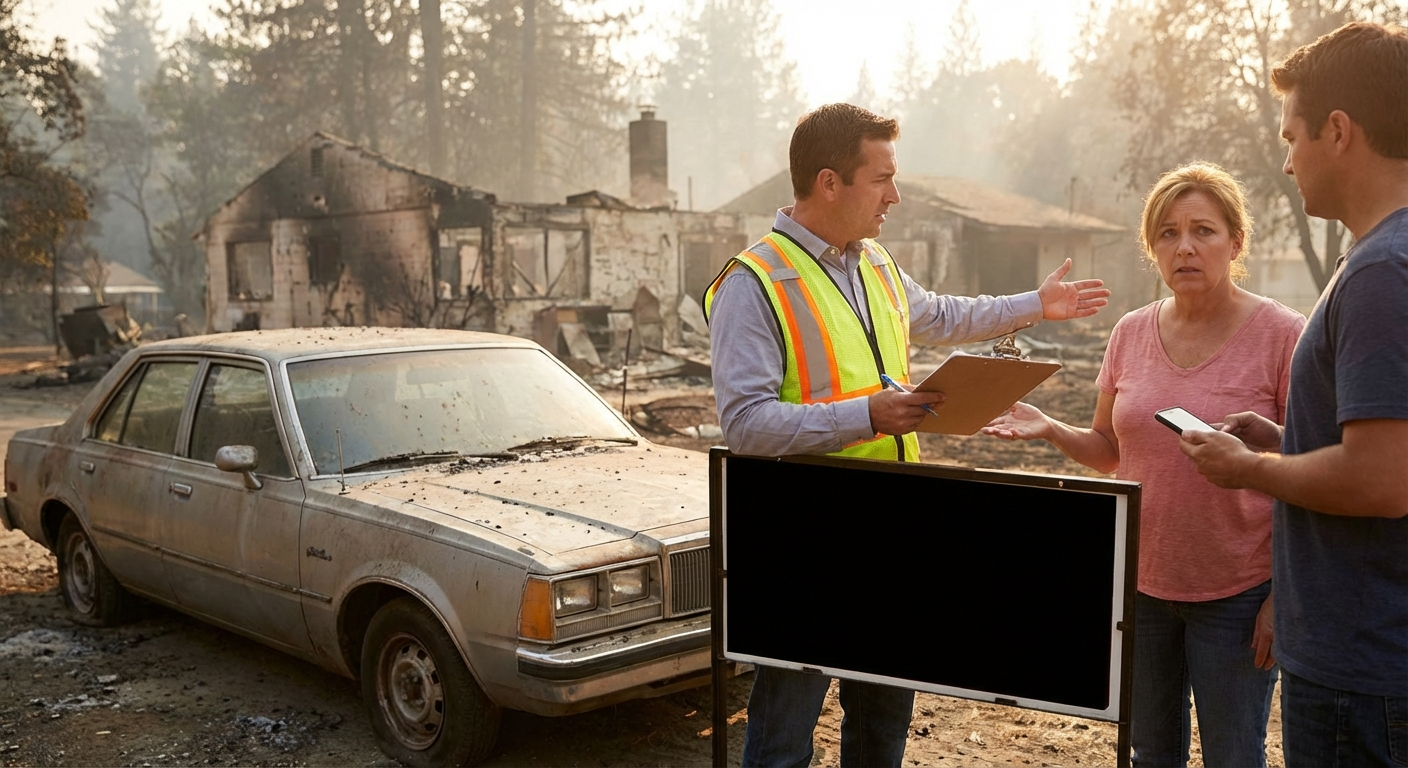
Imagine this scenario: your home in the Sierra Foothills, built in 1998, suffers significant damage from a wildfire. You’ve got an ACV policy. Your insurer assesses the damage to your kitchen cabinets, which are original to the house. They’re going to pay you the value of 26-year-old cabinets, not the cost of brand-new ones. That granite countertop, also original? Same story. Your roof, replaced 12 years ago? You’ll get its depreciated value.
You’re left with a check that won’t cover the full cost of rebuilding, renovating, or replacing your belongings with new equivalents. You’ll have to make up the difference yourself. For many families, that difference could be tens of thousands of dollars, or even more. It could mean the difference between getting back on your feet quickly and facing a long, difficult financial struggle.
This is why understanding your policy *before* disaster strikes is so important. Don’t just look at the premium. Look at the coverage details. Ask the tough questions.
For most California homeowners, having an expert guide you through these murky waters isn’t just a convenience; it’s a necessity. Someone who understands the nuances of Prop 103, the FAIR Plan changes, and what different insurers like AAA or smaller regional carriers are offering.
If you’re feeling overwhelmed, or just want to make sure you truly understand your options, it makes sense to talk to an independent insurance agent. Karl Susman and the team at Los Angeles Insurance Quotes (CA License #OB75129) are exactly the kind of people who can help you make sense of it all. They’ve been helping California families for years, and they know the local market inside and out.
Ready to explore your options and get a clear picture of your coverage? You can start by getting a personalized quote right now. Visit https://losangelesinsurancequotes.com/quote/ to begin.
The Fine Print: What to Look For
When you’re reviewing your policy, or discussing options with an agent, pay very close attention to how “Actual Cash Value” is applied. Is it just for your personal property? Or does it apply to your dwelling itself, or specific components like your roof? Sometimes, an insurer might offer a hybrid policy – RCV for the dwelling, but ACV for the roof once it hits a certain age. It’s all in the details.
Also, ask about “extended replacement cost” or “guaranteed replacement cost” if you’re lucky enough to find it. These coverages provide a buffer, paying more than your policy limit (usually 20-25% more) if rebuilding costs surge unexpectedly. That’s a real lifesaver in a state where construction costs are always on the rise.
If you’re in a high-risk area, and ACV is your only real option, consider what you can do to mitigate the financial hit. Can you save up an emergency fund specifically for potential depreciation costs? Can you make upgrades to your home – like a new, fire-resistant roof – that might qualify you for better coverage down the line, or at least reduce the depreciation factor? These are tough choices, but important ones.
Understanding ACV isn’t about scaring you. It’s about empowering you. It’s about making sure you’re prepared for whatever comes next, because in California, something usually does. Karl Susman and his team are always ready to answer your questions and help you find the right fit for your home and budget. You can reach Los Angeles Insurance Quotes at (877) 411-5200.
Want to see what kind of coverage you can get, and understand the difference between ACV and RCV for your specific situation? Don’t wait until it’s too late. Get your personalized quote today: https://losangelesinsurancequotes.com/quote/.
Frequently Asked Questions About Actual Cash Value
What items are typically covered by Actual Cash Value?
Often, personal belongings like furniture, electronics, and clothing are covered at ACV. Older roofs, sometimes even entire structures, might also fall under ACV, especially in California’s high-risk areas.
Can I upgrade from ACV to Replacement Cost Value (RCV) coverage?
Sometimes, yes. It depends on your home’s age, condition, location, and the specific insurer. Making home improvements that reduce risk, like a new fire-resistant roof, might help you qualify for RCV or better terms.
Does the California FAIR Plan offer Replacement Cost Value?
Generally, the California FAIR Plan provides coverage on an Actual Cash Value basis for both your dwelling and personal property. You can sometimes purchase an endorsement to get limited RCV for certain items, but it’s not standard.
How is depreciation calculated for Actual Cash Value?
Insurers consider the age of the item, its expected lifespan, and its condition. For example, a roof with a 20-year lifespan that’s 10 years old might have depreciated by 50%. The exact calculation methods can vary by insurer and item.
If I have an ACV policy, what’s my best strategy to protect myself financially?
Know your policy inside and out. Understand what’s covered by ACV versus RCV. Consider saving an emergency fund to cover the depreciation gap if you have an ACV policy. Also, actively maintain your home and make upgrades to prolong the life of components, which might reduce depreciation or even help you qualify for better coverage later.
***
This article is for informational purposes only and does not constitute financial advice.