
Understanding What Your California Insurance Doesn’t Cover
You buy insurance to protect what matters most, right? Your home, your car, your peace of mind. You shell out those premiums every month or year, trusting that if something bad happens, you’re covered. Honestly, that’s the whole point. But here’s the thing: no insurance policy covers *everything*. Not even close. Every single policy, from your homeowner’s to your auto to your renter’s, comes with a list of things it simply won’t pay for. We call these “exclusions.”
It’s a bit like buying a new smartphone. You get all these amazing features, but then you read the fine print and realize dropping it in the toilet isn’t covered by the warranty. Big difference. In the world of California insurance, understanding these exclusions isn’t just “good to know”; it’s absolutely essential. It can save you from a gut-wrenching surprise when you file a claim and hear, “Sorry, that’s not covered.”
The Basics: Why Do Exclusions Even Exist?
First off, it’s not some sneaky trick by insurance companies. Not always. Insurers manage risk. They calculate probabilities. They price policies based on the likelihood of certain events happening. If they had to cover every single possible disaster or mishap under the sun, premiums would be astronomical. Nobody could afford them.
So, exclusions help keep policies affordable by carving out specific, often high-cost or unpredictable risks. For example, some events are so catastrophic or widespread that they’d bankrupt an insurer if they had to pay out for everyone all at once. Other exclusions are for things you’re expected to maintain or prevent yourself. It’s a balance, really.

Common Exclusions for California Homeowners
For most California homeowners, this is where it gets interesting, and often, a little frustrating. Our state has its own unique set of risks that often fall squarely into the “excluded” category on standard policies.
Earthquakes and Landslides
This is probably the biggest one for anyone living in California. You’d think with all the seismic activity, earthquake damage would be a given, wouldn’t you? Nope. Standard homeowner’s policies *do not* cover earthquake damage. Your house could slide right off its foundation in a major tremor, and your primary policy wouldn’t pay a dime. This includes damage from any ensuing landslides or mudslides directly caused by the earthquake.
To get this coverage, you need a separate earthquake policy, often from the California Earthquake Authority (CEA) or a private insurer. It’s an additional cost, with its own deductibles — often a percentage of your home’s value, not a flat dollar amount. That’s not the whole story, though. Some policies also exclude damage from earth movement *not* caused by an earthquake, like a slow-moving landslide on a hillside property in Malibu or Pacific Palisades, even if it’s due to heavy rain. It’s a tricky area.
Flooding and Mudslides (Not Earthquake-Related)
Another big one, especially with our increasingly wild weather patterns. Think atmospheric rivers dumping inches of rain on Ventura County, or flash floods sweeping through the Inland Empire. Standard homeowner’s insurance *does not* cover flood damage. Period. This isn’t just a California thing; it’s national.
“But wait —” you might say, “what about water damage from a burst pipe?” That’s usually covered because it’s considered “sudden and accidental” internal water damage. A flood, however, is defined as water coming from *outside* your home – overflowing rivers, heavy rainfall, storm surge. Like earthquakes, you need a separate flood insurance policy, typically through the National Flood Insurance Program (NFIP) or a private market insurer. And just like earthquake policies, flood policies usually have their own exclusions and limitations. Mudslides and mudflows that aren’t earthquake-related are generally considered a form of flooding and also not covered by standard policies.
Wear and Tear, Neglect, and Lack of Maintenance
Your insurance policy isn’t a home maintenance plan. If your roof leaks because it’s 30 years old and you never replaced it, that’s usually not covered. If your deck collapses because the wood rotted away over years of neglect, that’s on you. Same goes for pest infestations — termites eating through your joists aren’t an insurable event; they’re a maintenance issue.
This makes sense, doesn’t it? Insurers expect you to keep your property in reasonable condition. They cover sudden, unexpected damage, not the slow decay that comes with owning a home. This often comes up after heavy rains, when homeowners realize their old gutters couldn’t handle the downpour, leading to water damage in the attic.
Intentional Damage or Criminal Acts
You can’t burn down your own house for the insurance money. That’s fraud, and it’s definitely not covered. Nor is damage from any criminal act committed by you or someone living with you. This is pretty straightforward.
Government Action and War
If the government condemns your property, or if your home is damaged in an act of war or a nuclear event, your standard policy won’t cover it. These are considered uninsurable risks due to their scale and nature.
Wildfires: A California-Specific Nuance
Here’s where California gets truly complicated. Wildfires *are* generally covered by standard homeowner’s policies. That’s a huge relief for many. But because wildfires have become so prevalent and destructive — think of the recent concerns over the 2025 LA fires and the ongoing challenges in places like the Santa Ynez Valley — many insurers have either stopped writing new policies in high-risk areas or significantly increased premiums. Some have even pulled out of the California market entirely, like State Farm did for new policies, citing “catastrophe exposure.”
This leaves many homeowners scrambling for coverage, often turning to the California FAIR Plan. The FAIR Plan is California’s “insurer of last resort” for those who can’t get coverage in the traditional market. It *does* cover wildfire damage, but here’s the catch: it’s a bare-bones policy. It often has lower coverage limits, and it excludes many things a standard policy would cover, like liability, theft, or certain types of water damage. You often need to pair a FAIR Plan policy with a “Difference in Conditions” (DIC) policy from another insurer to get comprehensive coverage. It’s a piecemeal solution, and it’s not cheap.
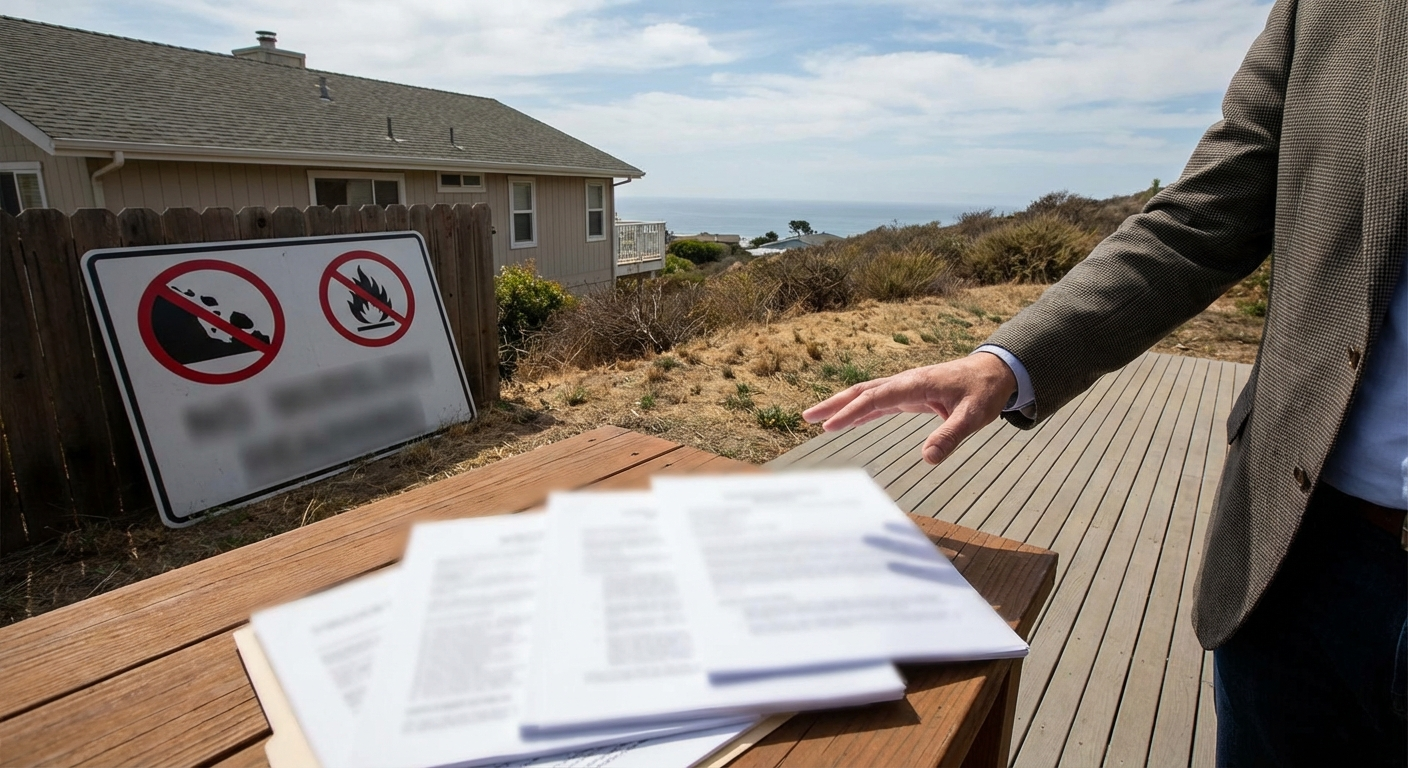
Which brings up something most people miss. When you’re in a high-risk wildfire area, even if your main policy covers fire, it might have specific exclusions or limitations related to brush clearance or maintaining defensible space around your home. If you don’t follow these rules, your claim could be denied or reduced.
Auto Insurance Exclusions
Your car insurance has its own list of things it won’t pay for.
Intentional Damage
Just like with your home, if you intentionally damage your car, your policy won’t cover it. This includes things like street racing or using your car in a demolition derby.
Using Your Car for Commercial Purposes Without Endorsement
If you’re using your personal car for a ride-sharing service like Uber or Lyft, or for deliveries, your personal auto policy usually won’t cover accidents that happen while you’re “on the clock” or actively engaged in commercial activity. You need a specific rideshare endorsement or a commercial policy for that. Companies like AAA or Farmers might offer these, but you have to ask for them.
Unlisted Drivers (Sometimes)
Most policies cover “permissive use” – meaning if you lend your car to a friend and they get into an accident, it’s usually covered. But if a regular driver in your household isn’t listed on your policy, especially a young driver, any damage they cause might be excluded. It’s always best to list everyone who regularly drives your car.
Wear and Tear
Just like with your house, your car insurance doesn’t pay for routine maintenance, oil changes, or tires that wear out. It’s for sudden, unexpected damage.
Renters Insurance Exclusions
If you rent an apartment in, say, Pasadena or Santa Monica, you’ve probably got renters insurance. It’s incredibly important, but it also has its limits.
Roommate’s Property
Unless your roommate is specifically named on your policy, their belongings generally aren’t covered. If their laptop gets stolen, your policy won’t replace it. They need their own policy.
Very High-Value Items (Without a Rider)
Most renters policies have limits on certain categories of items, like jewelry, fine art, or collectibles. If you have a diamond engagement ring worth $20,000, your policy might only pay out $1,500 for theft unless you have a separate “rider” or “endorsement” specifically for that item.
Damage to the Building Structure
Renters insurance covers your personal belongings and your liability. It doesn’t cover damage to the actual apartment building itself – that’s your landlord’s policy.
The “Act of God” Misconception
You’ll often hear people talk about “Acts of God” as if they’re universally excluded. That’s not entirely accurate. While some natural disasters are excluded (earthquakes, floods), others, like lightning strikes, windstorms, or hail, are typically *covered* by standard homeowner’s policies. The key is understanding which natural events are in, and which are out.
What to Do About It: Reading the Fine Print and Getting Help
Honestly, wading through insurance policy documents can feel like trying to read legal code written in another language. It’s dense, full of jargon, and designed to cover every possible scenario. That’s why so few people actually read their policies cover-to-cover. But that’s exactly where the exclusions are spelled out.
This is where a good independent insurance agent becomes invaluable. Someone like Karl Susman at Los Angeles Insurance Quotes, CA License #0B75129, can sit down with you and explain in plain English what your policy covers and, more importantly, what it *doesn’t*. They can help you identify your specific risks in California – maybe you live in a liquefaction zone, or near a wildland-urban interface – and then help you find policies or endorsements to fill those gaps. They can explain the ins and outs of the FAIR Plan, or whether a separate flood policy makes sense for your property in the Central Valley.
Don’t wait for a disaster to discover you’re not covered. Take the time now to understand your policy’s limitations. It’s better to be proactive than to learn the hard way.
Ready to talk through your current coverage or explore options for filling those exclusion gaps?
Get a California insurance quote today.
You might be surprised at how many options are available to protect you from those common California exclusions. Understanding what you’re buying is the first step toward real peace of mind.
Frequently Asked Questions About California Insurance Exclusions
Q: What’s the difference between an “exclusion” and a “limitation”?
An exclusion means the policy *never* covers a specific type of damage or event (e.g., standard homeowners policies exclude earthquake damage). A limitation means the policy *does* cover something, but only up to a certain dollar amount or under specific conditions (e.g., a jewelry limit of $1,500 for theft unless you add a special endorsement).
Q: Can I “buy back” coverage for an exclusion?
Often, yes. For major exclusions like earthquakes or floods, you can purchase separate policies. For other exclusions, you might be able to add an “endorsement” or “rider” to your existing policy. For example, if you have a home office, you might add an endorsement to cover business equipment or liability that your standard policy would exclude.
Q: Why is it so hard to get insurance in some parts of California?
Mainly due to the increasing frequency and severity of natural disasters, especially wildfires. Insurers manage risk, and when the risk becomes too high or unpredictable in certain areas, they may limit coverage or stop offering policies altogether to maintain their financial stability. This is why many homeowners in high-risk areas often rely on the California FAIR Plan.
Q: Does my auto insurance cover damage if I hit a deer?
Yes, usually. Hitting an animal, like a deer in the foothills near Sacramento, is generally covered under the “comprehensive” portion of your auto insurance policy. This covers damage from events other than collisions with other vehicles, such as theft, vandalism, fire, or hitting an animal.
Q: How often should I review my insurance policies for exclusions?
It’s a good idea to review your policies at least once a year, or whenever you have a major life change (like buying a new home, getting married, having children, or making significant renovations). Changes in your property, your family, or even local regulations (like those affecting the FAIR Plan after Prop 103) can all impact your coverage needs and potential exclusions. Talking to an expert like Karl Susman at Los Angeles Insurance Quotes can help keep you informed.
Need to understand your specific policy better?
Click here to get a personalized insurance quote and expert advice.
This article is for informational purposes only and does not constitute financial advice.